forum
library
tutorial
contact

Washington, Idaho to Tighten Steelhead Bag Limits
on the Snake River in Response to Paltry Return
by Michael WrightSpokesman-Review, September 16, 2026
|
the film forum library tutorial contact |
|
Washington, Idaho to Tighten Steelhead Bag Limits
by Michael Wright |
A total of 52,232 summer steelhead crossed Bonneville dam
between July 1 and September 15 -- the lowest count on record
 Fishery managers plan to tighten bag limits for Snake River steelhead this week in response to paltry returns.
Chris Donley, eastern region fish program manager for the Washington Department of Fish and Wildlife, said Tuesday that the state agency would cut steelhead bag limits for the Snake on both sides of Lower Granite Dam and for the Tucannon River.
The limit from the mouth of the Snake upstream to Lower Granite Dam will drop from three to one hatchery fish per day. From Lower Granite upstream to the Oregon border, the limit will be reduced to two hatchery fish per day. On the Tucannon River, the limit will be one hatchery fish per day.
The changes take effect on Friday.
The Idaho Department of Fish and Game will reduce its bag limits for steelhead starting at the end of fishing hours on Thursday. On the Snake and Salmon rivers, the limit drops to two fish. On the Clearwater River and its north, middle and south forks, the bag limit will also be two fish with the caveat that only one of the fish can be 28 inches or longer.
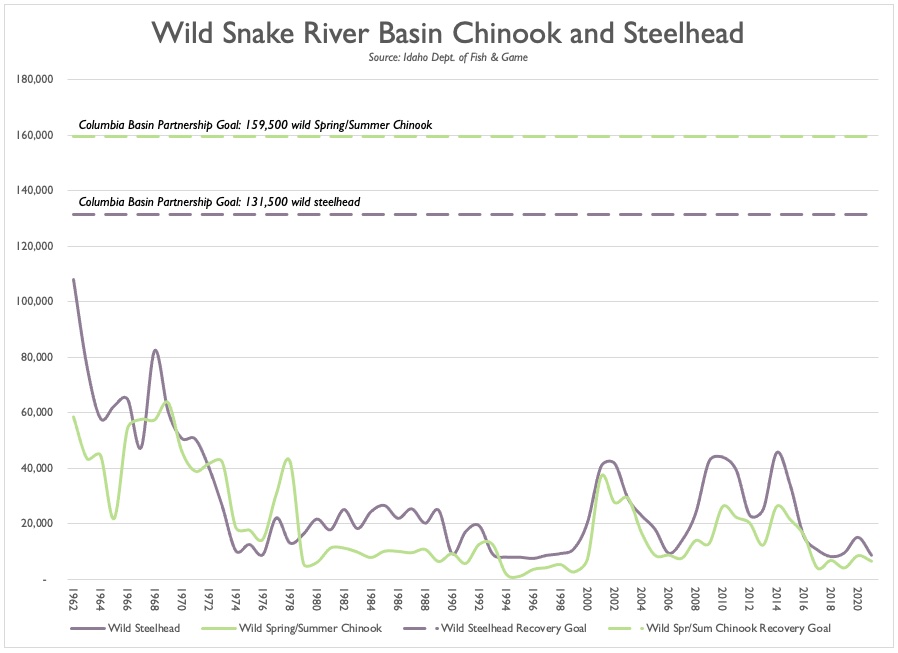
The change comes in response to crashing steelhead returns at Bonneville Dam, the first of eight dams steelhead cross when they return from the Pacific Ocean.
A total of 52,232 summer steelhead crossed the dam between July 1 and Monday -- the lowest count on record, according to the fact sheet from fishery managers released on Tuesday. Of those fish, 17,280 are wild fish.
That's about 43,000 fewer fish than the 10-year average for those dates. Last year at this time, more than 128,000 steelhead had been counted at Bonneville.
An updated forecast predicts the 2026 steelhead run will top out at 61,500 fish, which would be the lowest run size since Bonneville Dam was built in 1938. The forecast predicts that 8,100 of those will be the larger, late-arriving B-run steelhead.
Already fishery managers in Oregon and Washington have shut down steelhead harvest on the Columbia River. Oregon closed the Deschutes and John Day rivers, and Washington closed Drano Lake.
The return is still large enough for the Washington to allow a fishery on the Snake River under its permit with the National Oceanic and Atmospheric Association, Donley said. Dropping bag limits will ensure more fish stay in the river, get people off the water faster and reduce overall angling pressure on the species.
"That will limit our encounter rates, which will be good for steelhead across the season," Donley said.
The rules are designed to limit impacts on wild A-run steelhead. Donley said wild fish make up a higher portion of the population on the lower river and the Tucannon River, which is why the bag limit is being reduced to one there.
Upstream of Lower Granite Dam, there's a higher concentration of hatchery steelhead, which is why the state is comfortable with a two-fish limit there.
In addition to the run being small, fishery managers are concerned about the run's composition. Typically, the A-run steelhead return -- fish that migrate upstream in July and August -- consists of a mix of fish that have spent one or two years in the ocean.
This year, Donley said, 92% of the steelhead that have crossed Bonneville have spent two years in the ocean.
"The one-ocean cohort is completely missing, and typically they're the most abundant," Donley said.
Bag limits are also being changed for fall chinook. Idaho Fish and Game announced Tuesday that anglers' daily bag limit of three adult chinook now must only consist of fish with clipped adipose fins, meaning they're hatchery fish. The change takes effect at the end of fishing hours on Thursday.
Washington is making a similar change. Starting on Friday, Washington anglers will be allowed to keep only hatchery-origin adult chinook as part of their daily bag limit. There is no daily limit on jack chinook.
The changes come after the return of wild fall chinook came in lower than expected and as both states approach their allowable impact on wild stocks.
Related Pages:
Heat and Drought Devastate Sockeye Salmon Fishing and Spawning on Washington Rivers by William Yardley, Los Angeles Times, 8/3/15
Not Enough Fish: Washington Cancels Sockeye Season on Upper Columbia by Andrew Nusca, Spokesman-Review, 8/1/10
learn more on topics covered in the film
see the video
read the script
learn the songs
discussion forum