forum
library
tutorial
contact

Why WAWG is Showing Congress
the Reality of NW Dams
by Matthew Weaver
Capital Press, August 26, 2026
|
the film forum library tutorial contact |
|
Why WAWG is Showing Congress
by Matthew Weaver
|
Washington State is the 50th in the U.S. for farm profit,
she said of removing the dams. "That really hit home, too."
-- Michelle Hennings, WAWG executive director,
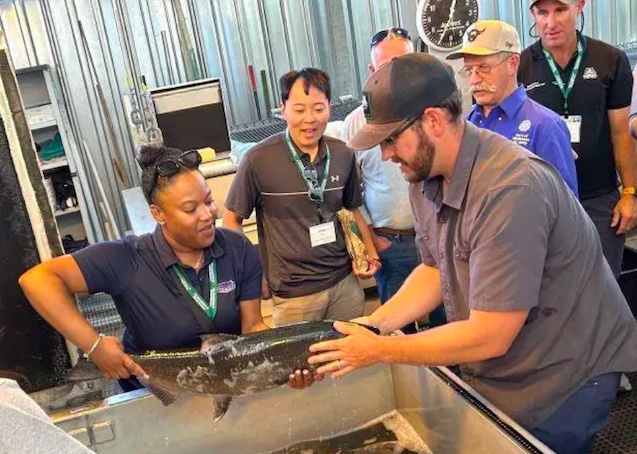 Washington Association of Wheat Growers led congressional staff members on a tour of the Northwest wheat industry during its fourth annual dam tour last week.
"We try to invite those staffers on committees in Washington D.C. that have a say if the Lower Snake River dams were ever to come up for a vote," Michelle Hennings, WAWG executive director, told Capital Press.
That includes the House Transportation Infrastructure Committee and House Committee of Natural Resources.
"It's getting people who hear about our system but have never seen it," Hennings said. "They see the system in-person. Because otherwise, they read about it. They really can't picture what it actually looks like, how it performs. When you can show people that, they take that back to D.C., they tell other staffers, they educate their Congressional member on it. Staffers are extremely important to the system in D.C. They are the ones that dive in and do the work."
The staffers represented Republicans and Democrats, Hennings said. States represented included Idaho, Florida, Georgia, Missouri and Nebraska.
"It's huge to be able to bring folks out of their offices in D.C., and help them see exactly what the system provides," echoed Leslie Druffel, director of outreach for The McGregor Company. "We get really good questions from the group at every stop throughout the day."
Following the tour, McGregor's Druffel feels re-energized.
"It really makes you feel good about the system and sharing the positive pieces that we have in regard to fish passage and fish survival, whether they're going upriver or downriver," Druffel said. "It makes me feel very confident in the system, what it offers, why it's there and what it provides, not just to the economies of the towns right along the river, but the entire Pacific Northwest."
Economic impact
The tour includes an overview of the importance of Marine Highway 84 for navigation, with speakers from Tidewater Barge Lines and American Cruise Lines; moving through the locks at and touring Lower Granite Dam, particularly the fish ladders that allow for salmon passage; the Port of Lewiston and the importance of the system for fuel, fertilizer, energy and farmers' costs.
Hennings spoke to the tour's members about the current economic outlook for Washington growers.
"This is just another burden that would add to the farmers, especially when Washington State is the 50th in the U.S. for farm profit," she said of removing the dams. "That really hit home, too."
Related Pages:
Salmon and Farmers are On the Same Side by Michelle Hennings, Spokesman-Review, 8/30/23

learn more on topics covered in the film
see the video
read the script
learn the songs
discussion forum