forum
library
tutorial
contact

The Squeeze on
Eastern Washington Farmers
by Dr. Barney Roca
Capital Press, May 12, 2026
|
the film forum library tutorial contact |
|
The Squeeze on
by Dr. Barney Roca
|
Roughly 97% of Washington apples and
90% of our wheat consumed outside the state
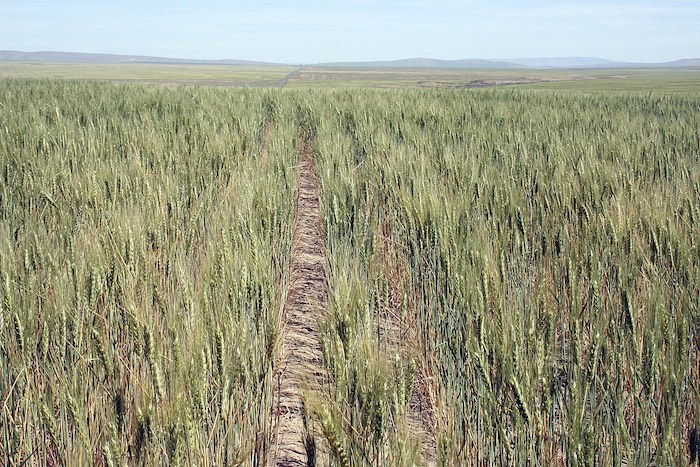 Between 2017 and 2022, Washington lost thousands of farms and ranches, averaging roughly two per day.
These losses reflect a broader shift in agriculture, where smaller, family-run operations are increasingly vulnerable to rising costs and tightening margins. Eastern Washington is particularly exposed because more than 90% of our farms are small, family-owned operations. Our farms are being squeezed from every direction at once.
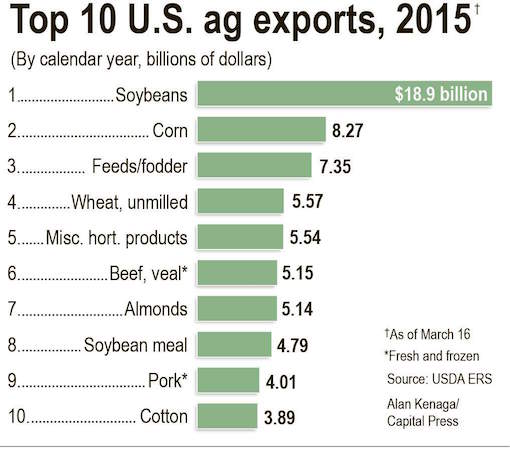
Washington agriculture operates in a global market. Apple growers depend heavily on exports, with roughly 97% of Washington apples and 90% of our wheat consumed outside the state. That means only one out of every 33 apples grown here is eaten here. When global trade shifts, local farms feel it immediately.
When Russia invaded Ukraine in 2022, it reshaped agricultural markets. Countries like Poland lost access to the Russian market, and their apples were redirected into other regions, particularly the Middle East and South Asia. Markets that Washington growers also depend on. More supply chasing the same buyers means downward pressure on prices, even as costs continue to rise at home.
At the same time, that same global disruption drove fertilizer prices sharply higher. For row crops like wheat and pulses, fertilizer accounts for roughly a third of production costs. The result is a different kind of squeeze: higher costs to grow crops, without any guarantee of higher prices when they are sold.
These pressures didn't begin in 2022; they intensified. Farmers were already operating on thin margins as the number of farms declined. Since then, fuel, transportation, and compliance costs have all climbed, driven by global instability, supply disruptions, trade tensions, and layered state and federal policies. These are not optional expenses. They are the baseline cost of producing food.
Labor is one of the most significant pressures facing farms today. According to data shared by the Northwest Horticultural Council, labor costs have risen dramatically over the past decade. In 2013, labor accounted for roughly 37% of grower returns. By 2023, that figure had climbed to nearly 100%, meaning the entire value of the crop was consumed by labor alone.
This is not sustainable.
 Farms have become increasingly dependent on the H-2A visa program to secure a reliable workforce. It is an essential but complex system shaped by decades-old legislation and evolving regulatory requirements. Industry leaders consistently point to the need for modernization, as the current system struggles to keep pace with realities on the ground.
As consolidation among buyers has increased, growers often find themselves selling into a marketplace with fewer, more powerful purchasers. While consumers may not see dramatic swings in retail prices, growers can experience significant pressure on what they receive for their crops. The gap between rising production costs and constrained pricing power continues to widen.
Overlay all of this with the realities of state and federal regulation on labor, energy, and infrastructure, like cold storage, and the picture becomes clear. No single policy is responsible. No single event explains it. The pressure is cumulative.
And it is suffocating.
"This is not one challenge -- it's many at once," said Jon DeVaney, president of the Washington State Tree Fruit Association. "Washington growers face a swarm of concurrent economic and public policy challenges over which they have no control."
This is not just an agricultural issue. It is a community issue.
Local farms support schools, small businesses, rural communities, and the regional economy. When farms struggle and close, the effects ripple far beyond the field.
This is not about left versus right or federal versus state. The forces shaping agriculture today are complex and interconnected.
But complexity does not mean helplessness.
We can modernize labor systems like H-2A, invest in agricultural infrastructure, and pursue stable trade relationships that protect export markets critical to Washington agriculture.
Most importantly, we can start paying attention.
If Eastern Washington agriculture continues to contract, the impact will not stay contained to rural communities. It will reach every part of the region.
The squeeze is real. The data is clear. And the stakes are higher than they appear.
What happens next is a choice.
Related Pages:
Washington Ranks Last in Farmer Take-Home Pay in 2024 by Matthew Weaver, Capital Press, 12/4/25
learn more on topics covered in the film
see the video
read the script
learn the songs
discussion forum