forum
library
tutorial
contact

Corps Proposes to Retain Hydro
Generation in Willamette SEIS
by K.C. Mehaffey
Clearing Up, June 1, 2026
|
the film forum library tutorial contact |
|
Corps Proposes to Retain Hydro
by K.C. Mehaffey
|
Deauthorizing power generation would require the dams to use
power from the grid to keep operating them for other purposes
 The U.S. Army Corps of Engineers is proposing to continue to operate and maintain the Willamette Valley System (WVS) in accordance with its eight congressionally authorized purposes--including hydropower generation.
An alternative that would cease federal hydropower operations in the WVS was analyzed in the Corps' final supplemental environmental impact statement (SEIS), released May 22.
Congress called for an analysis of deauthorizing hydropower generation in the Water Resources Development Act of 2024. The SEIS also analyzed a deep drawdown at Detroit Dam to comply with the project's biological opinion.
Deauthorizing power generation would result in the loss of about 171 aMW to the regional power system, "a long-term, substantial, adverse impact to Willamette Valley System Dam generation," the Corps said.
The agency said to remove hydropower as a purpose, the turbine units must be taken out because power would be generated if the turbines were left in place.
Deauthorizing power generation would also require the dams to use power from the grid to keep operating them for other purposes. "Each dam would then need [a] backup power source, such as a diesel generator," the SEIS says.
As with the draft EIS released in November 2025, the Corps found that deauthorizing hydropower would cost more and result in lower survival rates for threatened upper Willamette River spring Chinook and steelhead (Clearing Up No. 2237).
Two key stakeholders who supported deauthorizing hydropower production told Clearing Up that they're still analyzing the final SEIS, and will have a better understanding of the Corps' plans once it issues its record of decision (ROD).
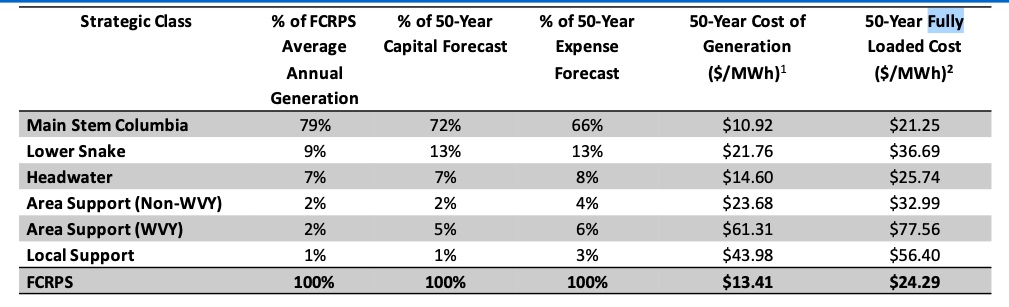
The Public Power Council noted that its members had raised concerns about the cost of power generated by the WVS.
"We hear regularly from our members and their end use customers about importance of both affordability and reliability to ensure the continued economic health of Northwest communities," PPC said in an email to Clearing Up. "As key financial stewards of the Willamette Valley projects, the ability to balance both of these objectives is something we take very seriously. We look forward to working with our federal partners to better understand the implications of the SEIS," it said.
The Native Fish Society also supported deauthorizing power generation in the WVS in order to open more options to salmon and steelhead recovery.
Jennifer Fairbrother, Native Fish Society's legislative and policy director, told Clearing Up that she is reviewing the SEIS and will be interested to see the Corps' ROD, which is expected to come in the next month.
She said the ROD will provide a timeline and show how the agency expects to implement its plan.
learn more on topics covered in the film
see the video
read the script
learn the songs
discussion forum