I. INTRODUCTION
The region is presently analyzing potential changes to four federal dams on the lower Snake River to restore Snake River salmon and steelhead. Snake River salmon and steelhead are listed under the Endangered Species Act, and the federal government is legally obligated to ensure that the lower Snake River dams do not put the salmon in jeopardy of extinction. Snake River drawdown, or removal of the earthen section of the four dams to restore a free-flowing river, is one of the options being considered to recover the listed stocks. The federal government is due to release its recovery plan, in the form of a Biological Opinion, in early 2000.
The four federal dams on the lower Snake enable river barge transportation of commodities, principally grain, from as far inland as Lewiston, Idaho -- 465 miles from the Pacific Ocean – to deep-water ports. If the dams are removed, commercial barge navigation would be eliminated in the Snake River, making the Tri-Cities, Washington, the furthest inland port accessible by river barge. As such, commodities that are currently transported by barge on the Snake River would have to be moved by some other transportation mode or combination of modes.
Currently, the Snake River waterway transports roughly 3.8 million tons of grain and a lesser quantity of other commodities to deep-water ports on the lower Columbia River. The potential elimination of this inland waterway has proved a contentious and politically charged issue, with farmers, fearful of perceived higher shipping rates, and barging interests opposing Snake River drawdown.
Recent studies have analyzed the economic impacts on commodity transportation of eliminating the Snake River waterway, focusing on the costs of shifting to alternative means and the resultant rate impacts. While these studies are essential to understanding potential economic impacts, they do not directly address a critical issue: whether the transition could be made such that no transportation capacity is lost and shipping rates remain affordable. If such a transition could be made, the economic hardship farmers fear need not occur. Of course, this information is essential to an informed decision about partial dam removal, but it has not been developed in any official process.
This Report addresses that critical issue, and sets forth a conceptual plan to ensure adequate shipping capacity and affordable rates. It is not offered as the only plan; there may be others with similar merit. The point, however, is that it is possible to replace Snake River barge transportation with alternative modes in a way that is affordable and does not limit capacity.
The Report is organized as follows. First, commodity transportation with and without the lower Snake River dams is described. Second, the projected costs of switching from river-barge transportation to rail/truck transportation and the potential rate impacts are presented. Finally, a conceptual transition plan is proposed and its feasibility evaluated.
II. TRANSPORTATION SYSTEM ALTERNATIVES AND THEIR COSTS
A. The Current System
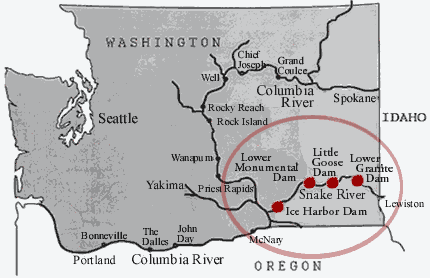
Four federal dams (Ice Harbor, Lower Monumental, Little Goose and Lower Granite) and their associated navigation locks, allow commercial barge traffic to travel up and down the Snake River between Lewiston, Idaho and the confluence with the Columbia River. (See Appendix 2 for map) This waterway, constructed by the United States Army Corps of Engineers, was completed in 1975 with the opening of a final navigation pool created by the farthest inland (eastward) dam, Lower Granite. Prior to the completion of the waterway, grain and other commodities in the region were transported by truck and rail.
| Dam | Year Completed |
| Ice Harbor | 1962 |
| Lower Monumental | 1969 |
| Little Goose | 1970 |
| Lower Granite | 1975 |
The Snake River waterway is an extension of the Columbia River navigation channel, which allows for commercial navigation between the Pacific Ocean and Pasco, Washington. Deep-water ports on the lower Columbia River are major international export terminals and are the final destination of barge traffic originating on the Snake River.
Even with the waterway, the majority of grain delivered to Columbia River export terminals is transported by rail – approximately 55%. Approximately 43% is transported by river barge. Approximately 55% of the grain that arrives at export terminals via the waterway originates in the Snake River portion; the remainder enters the system on the Columbia and will not be affected by closing the Snake River waterway. Approximately 2% is shipped by truck. In those areas using the Snake River waterway, grain shipment is more evenly split between rail and truck-barge.
Both mainline and shortline railroads operate in the vicinity of the lower Snake River. Burlington Northern Railroad and Union Pacific Railroad are the mainline companies. There are several shortline railroads operating in the region, including the Camas Prairie Railnet, Blue Mountain Railroad, Columbia Basin Railroad, and the Palouse River & Coulee City Railroad.
Federal taxpayers funded the construction of the navigation portion of each dam and federal taxpayers continue to fund the annual operations and maintenance costs of the navigation locks. The remaining costs (i.e. 90%) are borne by electricity ratepayers in the region, who use the energy produced at the dams, which is sold by the Bonneville Power Administration.
The primary purposes served by the dams are hydropower and navigation. Costs, both capital and operations and maintenance, are allocated roughly 90% to hydropower and 10% to navigation. The same allocation is used for fish and wildlife mitigation costs associated with the four dams. The Bonneville Power Administration, which markets the power generated at the dams, pays for its allocated share through electric rates. Federal taxpayers cover the cost allocated to navigation. The annual federal subsidy of the waterway for O&M and for the navigation portion of the fish and wildlife mitigation is estimated to be approximately $10 million.
The waterway is primarily used to ship commodities downstream (westward) from inland areas to export ports on the lower Columbia River. Grain shipments account for 75% of the river-borne traffic on the Snake River portion of the waterway; wood chips and logs account for an additional 18%.
The Snake River Waterway is located almost entirely within eastern Washington, and most of the grain that moves on the waterway comes from eastern Washington farms. Idaho farmers also transport a significant amount of grain on the waterway. Farmers in other states also send grain down the Snake, but because of their distance from the waterway and the economics of long haul grain trucking, their contribution is quite small. The relative distribution of grain shipments is set forth below.
Origin of Grain Transported on the Snake River Waterway
| State of Origin | Distribution of Snake River Barged Grain |
| Washington | 68.6% |
| Idaho | 22.2% |
| Montana | 5.5% |
| North Dakota | 2.6% |
| Oregon | 1% |
| Utah | .1% |
Currently, eastern Washington wheat is trucked from country elevators to river elevators/ports for barge shipment to Portland (61%), shipped via rail directly to Portland (23%) or trucked to another elevator for rail transport to Portland (13%). Grain from Montana and North Dakota is trucked from these respective states to the Lewiston (ID) area where it is loaded on barges and shipped down the waterway. This “long haul” trucking is unique to the waterway and made possible only by the fact that trucks headed to Lewiston to pick up loads of forest products are seeking loads of wheat to help cover costs.
It is important to note that the current Snake River waterway is a very recent creation; the final dam in the system was completed only 25 years ago. The geographic area that utilizes the waterway has historically been a major grain producer. Prior to the construction of these dams, commodities were imported and exported from the region by truck and rail. Much of this infrastructure remains, though a significant amount of track has been abandoned. If the lower Snake River dams were removed, truck-barge and rail would once again be relied upon to service the transportation needs of the area, as discussed in the next section.
B. The Post-Dam Removal System
Closing the Snake River waterway would significantly alter the way in which commodities are shipped in the lower Snake River Basin. The most obvious impact would be shifting the head of navigation from Lewiston, ID (on the Snake River) to the Tri-Cities, WA (on the Columbia River). Eliminating barge traffic on the Snake would mean that the commodities currently being shipped on the Snake River would have to be shipped via other modes. There are two primary transportation alternatives: 1) rail service from grain elevators to deepwater ports; and 2) truck from farm/elevator to Columbia River barge port and then by barge to deepwater port. These are the most likely alternatives because they minimize handling costs.
Several studies have analyzed the potential cost and rate impacts associated with closure of the Snake River waterway. Each study has a unique focus and approach, and each employs different assumptions. Consequently, the results are not easily compared. Nonetheless, the studies do identify the types of capital investments that would be necessary to replace the waterway and a range of likely cost and rate changes, which can guide the development of a transition plan. The studies are summarized below.
1. Infrastructure Costs
a. Highway
There are two primary studies that analyze the likely impact of Snake River waterway closure on highway use and infrastructure and maintenance costs. Impact of Snake River Drawdown on Transportation of Grains in Eastern Washington: Competitive and Rail Car Constraints (EWITS Study), predicts a range of cost and rate increases under eight potential grain shipment scenarios. The Lower Snake River Drawdown Study (HDR Study), identifies a range of highway and rail cost adjustments under two scenarios, one which relies heavily on truck-barge and another which relies more on rail to absorb the grain presently shipped via Snake River barge.
The HDR Study focused on the real cost of the infrastructure changes that would be required under the two scenarios. The analysis was limited to the State of Washington, where the vast majority of infrastructure needs would be located. Under the “highway scenario,” trucks would ship 2.7 of the 3.8 million tons of grain to the Tri-Cities, where it would be loaded on river barges for shipment down the Columbia. This would require that $84.1 million to $100.7 million be spent on highway infrastructure upgrades. In contrast, under the “rail scenario,” where railroads would ship 2.2 million tons and only 1.6 million tons would be shipped via truck-barge, highway infrastructure costs would only increase from $56 to $67.2 million. Virtually all of these highway costs would be incurred in three corridors: (1) US 395 (Tri-Cities to Ritzville); (2) SR 26 (Tri-Cities to Colfax); and (3) SR 124/US 12 (Tri-Cities to Clarkston). Additional upgrades would be required around the Tri-Cities.
The EWITS Study predicts annual infrastructure cost changes for each mix of rail and truck-barge modeled. In contrast with the HDR Study, which evaluated only state highways, the EWITS Study looked at interstate, state, and county highways. EWITS Scenario 4, which assumes that rail shipments are limited to 110% of historical volume and rail companies increase rates by 10% (similar to the highway scenario in the HDR Study), would result in annual state and interstate highway cost increases of $2.8 million and $22,000 respectively, while county road costs would decrease by approximately $228,000. Scenario 4 provides a good estimate for the likely annual cost adjustments in a scenario in which highways would absorb most of the additional load, and thus could be considered a high-end estimate.
In contrast with Washington, highway costs in Idaho are expected to decrease significantly, as more grain is shipped via rail requiring a shorter truck-haul than current movement to barge ports around Lewiston. The cost savings of reduced highway use in Idaho has not been estimated.
It is instructive to compare the projected annual highway cost increases under EWITS Scenario 4 -- $2.6 million (the projected highway costs are even less if Idaho is included in the analysis) -- with the current annual Snake River waterway operations and maintenance and associated subsidies of approximately $10 million. The annual highway costs necessitated by the closure of the waterway would be approximately 1/4 of the current waterway operations and maintenance subsidy.
b. Rail
The need for additional rail infrastructure would depend on whether or not rail or truck-barge would become the preferred alternative. If truck-barge were preferred, then the need for rail investments would be reduced. This is essentially the highway scenario modeled in the HDR study, where only 1 million of the 3.8 million tons would be shifted to rail. This scenario would require no major rail line upgrades. However, it is likely that some capacity upgrades (such as rail cars) will be needed.
In contrast, if rail became the preferred alternative, as reflected in the rail scenario modeled by HDR, rail would be used to ship up to 2.2 million tons of the grain diverted from the Snake River. The rail scenario is based on the assumption that railroads would be the most cost-effective alternative, because they would alter their pricing strategy and/or introduce more efficient technologies such as shuttle trains to better compete with truck-barge and capture a substantial share of the grain now being moved on the Snake. Accordingly, it assumes that railroad costs would be reduced relative to truck/barge rates by 10%.
In its rail scenario, the HDR Study estimates that between $76.4 million and $91.8 million would need to be spent on rail infrastructure improvements, as set forth below. In addition, the HDR Study estimates that approximately $50-$55 million would be required to purchase new rail cars. The total infrastructure cost under this scenario, including highway upgrades, would be $182.4 - $217 million for the state of Washington.
Infrastructure needs: Rail Scenario (Costs in millions)
| Railroad Corridor | Interchange Low-high | Track Upgrade low-high | Bridges, etc low-high | Elevators and loading low-high | Total Low | Total High |
| Blue Mtn RR | - | - | - | 0.4-0.5 | 0.4 | 0.5 |
| Palouse River RR | 2.8-3.4 | 4.6-5.5 | 1-1.2 | 8.8-10.6 | 17.2 | 20.7 |
| Camas Prairie | 2.0-2.4 | - | - | 0.8-1.0 | 2.8 | 3.4 |
| BNSF/UP Mainline | - | - | - | 8.4-10.1 | 8.4 | 10.1 |
| Coulee City Palouse River Corridor | 2-2.4 | 4-4.8 | 1-1.2 | 4-4.8 | 11.0 | 13.2 |
| Columbia Basin Corridor | - | - | - | 1.6-1.9 | 1.6 | 1.9 |
| Columbia River Ports | - | - | - | 35-42 | 35.0 | 42.0 |
| SUBTOTAL | 6.8-8.2 | 8.6-10.3 | 2.0-2.4 | 59.0-70.9 | 79.4 | 91.8 |
| New Rail Cars | - | - | - | - | 50.0 | 55.0 |
| Highway Improvements | - | - | - | - | 56.0 | 67.2 |
| | | | | TOTAL | 182.4 | 217.0 |
It is important to note that these additional rail investments would only occur if the railroads could compete effectively with truck-barge. If the railroads determine that they can compete and do so, their private capital would be used for rail infrastructure upgrades, which comprise $126.4 - $146.8 million of the total rail scenario cost. Consequently, public costs would be limited to the highway upgrades. It is possible, however, that the railroads would not compete aggressively, in which case public funds may be needed to “seed” private investment, as discussed below. This would require some additional public funds, but that money could be recouped over time.
The HDR rail scenario is a “worst-case” scenario as defined by the maximum total cost of the new infrastructure that would be required. That said, the HDR Study may significantly overestimate the projected costs; neither the Corps nor the EWITS studies have identified infrastructure costs as high as the HDR study. For instance, the need for additional rail cars or export elevator capacity may be significantly less than estimated ($85-$97 million).
2. Total Annual Cost
In its draft Transportation Report for its Lower Snake River Drawdown Study, the Army Corps used its standard economic analysis to estimate the likely increase in shipping costs that would result from transporting commodities presently shipped via Snake River barge by existing “least cost” alternative modes. The analysis focused on direct economic effects defined in terms of opportunity costs, not market rates. This is standard Net Economic Development (NED) methodology.
Under the Corps' analysis, annual total shipping cost increases of approximately $34 million for grain are predicted. The projected cost increases are not uniform throughout the affected region and range from 3 to 39 cents/bushel. Washington would shoulder 60% of the increased costs and Idaho 30%. The Corps' cost increase estimates for grain assume that, of the 3.8 million tons of grain that would be diverted from Snake River barge, 1.1 million tons or 29% would move by rail and 2.7 million tons or 71% would move by truck-barge. (This new grain movement pattern is essentially the highway scenario modeled by HDR.) The projected cost increase includes the cost of infrastructure upgrades at existing facilities that the Corps has deemed necessary.
III. POTENTIAL RATE IMPACTS
Two recent studies examine the potential rate impacts on farmers and other shippers of eliminating the lower Snake River waterway. These studies analyze both competition between competing alternatives and real cost changes to estimate potential rate impacts.
The first study is being conducted by the Upper Great Plains Transportation Institute (UGPTI), and preliminary results have been presented. The study is evaluating the competitive advantages of rail versus truck-barge and has reached the following preliminary conclusions:
(1) For long-distance markets in the Dakotas and Montana, there would be virtually no rate impacts or shift in transportation modes; and
(2) For many of the local markets (Washington, Idaho, and Oregon), the preferred, low-cost alternative would remain truck-barge and not rail, and rate increases would be a direct function of the increase in truck costs resulting from longer trips to the barge-loading facilities in the Tri-Cities.
The UGPTI Study hypothesizes that railroads would not be competitive in the “local market” because of their higher costs and therefore competitive disadvantage. However, single-car rail rates were used to make the comparison. The analysis is being expanded to include a 26-car rate. The trend in the region is to move towards more efficient service packages, such as 26 or 52-car rates, which would make rail more competitive with truck-barge.
The second study is the EWITS Study discussed previously in the discussion of infrastructure costs, which took a different approach to analyzing rate impacts. The EWITS study did not attempt to determine the most likely scenario, but rather modeled price increases using nine different scenarios – the status quo transportation system and eight post-dam removal alternatives. The scenarios differ in regard to assumptions made about the ability of railroads to accommodate the increase in freight and about the possible increase in shipping rates charged by both rail and barge (on the Columbia).
The EWITS Study predicts a range of average rate increases from 0.98 to 8.41 cents per bushel for wheat, or about a 2-17% average increase. Rate increases were calculated based on all shipments regardless of transportation mode (i.e., truck-barge or rail). Higher rates occur under scenarios where capacity is constrained (i.e., rail and barge cannot handle the volume). Conversely, rate increases are much lower if sufficient capacity exists to move the grain. The study calculates the average rate increase under each scenario, meaning that the actual rate for an individual farmer would vary depending upon factors such as distance from ports.
IV. THE CONCEPTUAL TRANSITION PLAN
A. Need and Purpose
These aforementioned studies do not tell us what the actual cost of closing the Snake River waterway would be or the actual rate impacts of such a shift. Rather, they provide insight regarding probable outcomes given particular assumptions. Collectively they provide valuable information on potential cost and rate responses to closure of the waterway, and how those responses would affect particular geographic areas. Key pieces of information include:
· Without competition from railroads, truck-barge will continue to be the preferred shipping mode for approximately 70% of the grain displaced from the Snake River waterway.
· Cost and rate impacts, given existing infrastructure constraints, will not be evenly distributed across the affected region.
· Farmers in the eastern counties of Washington and western Idaho would experience the highest rate increases; farmers close to the Tri-Cities would see no or minimal rate increases.
· Increasing railroad capacity in those areas that would experience higher trucking costs could alleviate significant rate impacts.
· It is uncertain whether railroads would elect to compete for a share of the grain displaced from the Snake River.
· Competition between rail and truck-barge is the key to low shipping rates after drawdown.
This information enables formulation of a conceptual plan to ensure a timely and efficient transition to an affordable alternative commodity transportation system. The purpose of the transition plan would be to ensure that affordable alternatives to Snake River barge transportation are in place at the time the Snake River waterway is closed. Doing so will help to minimize rate increases. Ultimately, the goal is to maintain a vibrant agricultural economy in the affected region and the restoration of healthy salmon and steelhead runs in the Snake River.
B. Guiding Principles
A prudent, focused transition plan should be based on sound economic and legal principles, which define the objectives and set appropriate parameters. The guiding principles for our transition plan are set forth below.
· There is no right or entitlement to a Snake River waterway. Congress may eliminate the waterway if to do so is in the public interest.
· It is in the public interest for federal and state governments to facilitate economic transitions, particularly if there are national economic efficiencies to be gained and the transition is necessitated by government action.
· The desire to mitigate economic hardship may mean it is appropriate to facilitate transition to an economy not reliant on the lower Snake River waterway. Such mitigation should be need-based.
· A cost-effective and equitable transition plan would require federal, state and private cooperation in plan development, execution and funding.
· The federal government can and should authorize funding for the transition plan as part of the authorization to remove the Snake River dams, as it is an appropriate cost of salmon restoration.
C. Plan Authorization, Structure and Implementation
A federally authorized partial dam removal project to restore salmon should include actions that go beyond the physical removal of the earthen embankments of the four lower Snake River dams. It is appropriate that the dam removal project include provisions to minimize the negative impacts that the project will have on those that currently rely on the Snake River waterway to transport commodities. Such provisions go beyond the current scope of the Corps' planning.
The following provisions should be incorporated into the project:
· Funding for public infrastructure investments (highways) necessary to develop the public components of an efficient alternative transportation network is an appropriate cost of salmon restoration and is to be included within the scope of any authorization of a Snake River Drawdown project.
· Funding for loans and grants to the private sector (such as grain elevators, terminals, railroads and other service providers) to expedite installation of new infrastructure or the introduction of more efficient technologies and, at the same time, to assist shippers in obtaining favorable shipping rates also is to be authorized as part of the Snake River Drawdown project. (All loans would be required to be self-liquidating, and all financial assistance to private entities would provide for rate guarantees or other benefits to shippers.)
· States would work with affected parties to identify infrastructure needs necessary to minimize transportation cost increases. States would be responsible for all infrastructure planning, developing the means for accepting federal funds, making direct infrastructure investments and providing financial assistance to private entities.
· The Secretary of the Army would review and approve all state-proposed projects and financial assistance in accord with established criteria.
· Approved projects would be eligible for a credit or reimbursement to the State according to the overall cost-sharing formula applicable to the Snake River Drawdown project.
· The State and the Federal Government would share the proceeds from loan repayments in accordance with the drawdown project's cost-sharing formula.
· A cap or ceiling would be placed on project funds available for transportation mitigation activities.
Stakeholders would be active participants in developing priorities and funding standards, working directly with the states and local governments. An example of this type of cooperation can be found in the Washington Freight Mobility Strategic Investment Board. The Board, created in 1995 to review and recommend funding for freight mobility projects important to the state, consists of both public and private sector representatives. The program provides $1.60 in matching funds for each dollar invested.
It is important to note that the infrastructure investments made under the plan would benefit the general public as well as the entities that presently rely on the Snake River waterway. For example, improvements in highway infrastructure would benefit all who use the roadways. Similarly, an improved rail and highway system would potentially spur economic development in areas which otherwise would not attract businesses.
D. Timing
Infrastructure investments require time to plan and implement whether they are made by the public or private sector. More than economic factors come into play because public decision-making processes need to be followed. State or local governments make highway investment decisions, and private investments, such as railway expansions, often require a variety of government permits. Because the Snake River drawdown will take at least eight years to implement, there is sufficient time to plan and implement the complementary infrastructure investments necessary to facilitate a smooth transition and eliminate the short-run cost increases that normally signal the need for increased investment. Government would play a central role in ensuring that the transition occurs in a timely fashion.
E. Possible Federal Criteria for Infrastructure Improvements
For such a program to have maximum benefits, planning and decision-making must be at the state level. In the interest of equity among the states and consistent evaluations of potential projects, the Secretary of the Army would be required by the drawdown project authorization to issue regulations regarding project eligibility and justification procedures. The Secretary would approve projects meeting the established criteria as authorized drawdown project costs.
The criteria would be intended to meet agreed upon public policy and economic considerations. While the criteria would be expected to be formulated under a formal rulemaking process and include the opportunity for public input, some fundamental directions can be suggested on the basis of the principles of economic analysis and benefit cost criteria as a guide to public decision-making.
· A planning report that presents the proposed project's direct benefits and costs would have to be prepared.
· The benefits from any investment or activity wholly or in part financed by a state grant or loan would have to have projected benefits greater than its costs.
· Former Snake River shippers would have to be a substantial share of the users of the new facility or service.
· In the case of state grants and loans to the private sector, total benefits – (i.e. those reflected in revenues, shipper rate savings and savings in highway maintenance costs and otherwise) would have to exceed the amount of the grant or loan.
· Project justification criteria would include beneficial environmental and social impacts.
F. Potential Mitigation Projects
As noted above, the States, in cooperation with local communities, are in the best position to identify specific infrastructure improvements and financial assistance necessary to complete a timely transition to a rail and truck/barge-based commodity transportation system. Several types of infrastructure investment should be considered as part of the transition plan. The intent is not to advance a particular project, but rather to demonstrate the feasibility and logic of such investments.
1. Railroads
As noted previously, whether railroads would elect to upgrade their infrastructure to compete with truck-barge to capture a share of the 120 million plus bushels of grain that would be diverted off the Snake River is not known at this time. Ultimately, the decision would be based on the profitability of such an enterprise. The UGPTI Study predicts that railroads would not compete aggressively for market share because the profit margins are too small and the barge companies have a large profit margin that gives them considerable competitive advantage. That conclusion, however, is based on single-car rates. If the railroads offered lower rates based on 26-car trains, for example, railroads may be able to compete with truck-barge, particularly in those areas where trucking costs are high due to distance from the Tri-Cities. The UGPTI study is presently analyzing this possibility.
Of course, this could be done only if the infrastructure existed to support such operations. What is clear from the studies is the fact that additional rail capacity is almost certainly needed to keep rates near their present levels and minimize increases in the areas that are distant from the Tri-Cities. Public funding could help stimulate rail infrastructure investments in these areas. Substantial benefits to shippers and railroads may occur through a collaborative approach to adjusting infrastructure and modal capacity.
There is precedent for public investment in railroads, both at the federal and state level, when such investment is in the public interest. Because railroad improvements generate benefits such as reduced damage to state roads and highways, which are substantial and yet are not reflected in any business calculus, states have had assistance programs for decades. For example, the Washington State legislature created its current Freight Rail Program in 1990. It directed the Department of Transportation to implement a program for rail coordination, planning and technical assistance including participation in freight rail planning and service preservation. The program was broadened in 1995 to include port access, light density lines and corridor preservation. Funds presently come from federal, state and local sources.
South Dakota is another state that has taken steps to preserve rail transport. The South Dakota legislature has implemented programs to help finance the improvement and reconstruction of railroad properties and facilities. The legislature created the Railroad Trust Fund for the purposes of planning, enlarging, maintaining, equipping and protecting railroads and railroad facilities. The Trust Fund is used to make loans to regional railroad authorities, match federal railroad rehabilitation funds or to join other states in preserving certain railroads.
Set forth below are specific examples of the type of collaborative railroad enhancement projects that could be funded in the area affected by dam removal.
a. Multi-Car Shuttle or Unit Trains
Railroads are able to reduce operating costs – and consequently reduce rates – by using trains of 26 or more cars and offering service packages that are based on multiple trips (e.g. four trips of 100 car trains.)
In the spring of 1999, the JR Simplot Company opened a $5 million grain train terminal in Mountain Home, Idaho. This terminal is specially designed to handle “shuttle trains” – trains with over 100 grain hopper cars. It was designed this way to take advantage of the economic efficiencies and benefits of handling large shipments. This facility allows Simplot to economically import the grain it needs from the Midwest. Facilities that take advantage of similar large unit train efficiencies should be explored for Snake River grain export to Portland.
Similarly, in May 1999 the Camas Prairie Railnet sent a 75-car grain train from Idaho to Portland. It was reported that the shipping costs on the 75-car train were competitive with barge transportation. This demonstrates that rail can be competitive with truck-barge, even with the lower Snake River waterway operating. Aid for improving the infrastructure and capacity to move grain in this manner may help such trains be even more economical.
b. Rail Cars
If grain car availability is a limiting factor, a public-private partnership could be used to alleviate the shortage. The State of Washington has experimented recently with assistance to shippers in the Palouse region. Hopper cars were purchased with public funds and then leased to local shippers to improve grain car availability and potentially reduce shipping costs. An evaluation of its first year of operation found it to be a success. This program has been extremely successful in the limited area that it operates. Such efforts could be expanded to Idaho, where unit trains could be assembled, added to in Lewiston, and then moved directly to Portland.
c. Elevator Upgrades
Loading and unloading facilities must be adequate to move the large quantities of grain that 26-car or larger trains would carry. The state of South Dakota has helped finance elevator upgrades to maintain affordable rates. The State helped some elevators with industrial track expansion through small loans from the Railroad Trust Fund. This enables elevators to take advantage of better rates available to grain loading facilities that can load 108-car trains in a short time span.
Funds also were used in October 1994 to assist the Dakota, Minnesota, and Eastern Railroad construct the industrial siding serving Dakota Mill and Grain in Midland, SD. Completion of the project allows the elevator to load 25-car unit grain trains. As a result of the project, car loading at the elevator in 1995 was 160% higher than in 1993. Similar investments could be explored in the Snake River area.
2. Highways
The HDR and EWITS studies identify the highway improvements in eastern Washington that might be needed in the absence of a Snake River waterway. The extent to which highway improvements would be required is unknown, and depends to a large extent on the mix of rail and highway transportation. If rail shipment became the preferred alternative, a different and often shorter truck movement would be required. For this reason, the Corps of Engineers concludes in their Drawdown Regional Economic Workgroup (DREW) report on transportation that there may not be any increase in highway costs.
It is likely, however, that some highway infrastructure investments would be required along the primary transportation corridors in eastern Washington. For example, most truck traffic from other states going to the Tri-Cities river terminals at the new head of navigation on the Columbia River would use SR124/US12 from Clarkston, WA at the Idaho border, the present head of navigation. The State of Washington has identified “Strategic Freight Corridors,” which are designated as priorities for state funding according to specific economic criteria. Some of the routes identified in the Corps' drawdown study as requiring investment are already strategic corridors. Others could likely be designated to garner state funds, as the designations are reviewed by law every two years.
V. PROJECT FUNDING
Adequate funding is essential for an effective, timely transition plan. Although the actual cost of the plan cannot be determined until the specific investments are identified, it is possible, based on cost estimates in the aforementioned studies, to demonstrate the affordability of such a plan.
The most costly infrastructure scenario identified to date – the “rail scenario” from the HDR study – provides a worst-case scenario that can be used to demonstrate affordability of the plan. The “rail scenario” projects that $217 million in rail and highway infrastructure will be needed in Washington to move 2.2 million tons of grain by train and the remainder by truck-barge.
Three factors complicate using the HDR study numbers for program planning. First, it is probable that most of the non-highway costs (e.g., rail and elevator upgrades) would be borne by the private sector. Second, the federal contribution would be leveraged by funds from non-federal sponsors (i.e., states, local governments, or private entities) in accord with whatever cost-share formula is established. Thus, the public funds required would likely be substantially lower than the estimate used here, which assumes no private funding of non-highway costs without the inducement of federal funds. Third, the analysis is limited to Washington State. Nonetheless, on balance, the HDR “rail scenario” provides a rough estimate of high-end potential costs.
Assuming a 75/25 federal/non-federal sponsor cost share with no private investment for railroad upgrades, the maximum federal share in the HDR “rail scenario” would be $162.75 million for the project. With a 50/50 cost-share, the federal share would be $108.5 million. The state in which the project was located and/or local sponsors would fund the remaining amount. Assuming no private investment and a 50/50 cost-share formula, the maximum share for the states would be approximately $108.5.
For comparison, the low-end total cost estimate for the HDR “highway scenario” is $84 million. Highway infrastructure is publicly funded (i.e. there will be no private investment). Assuming a 75/25 cost share, the federal government would fund $63 million of the total cost; with a 50/50 cost-share, the federal share would be $42 million. The low-end state estimate would therefore be $42 million.
In the end, highway and railway upgrades are affordable. The exact amount however is not easily ascertained. Above it has been estimated that a “worst-case” high-end estimate for federal costs is $162.5 million. Similarly, the “worst-case” high-end estimate for States' costs is $108.5 million. To place this in perspective, Washington State's 20-year State Highway System Plan has annual budget estimates of nearly $2 billion. In the event of partial dam removal, the infrastructure upgrades that will be required to ensure that commodities continue to flow economically and efficiently are affordable.
Infrastructure investments required to implement the transition plan – costing a potential maximum of $217 million in federal and state funds -- could be fully funded with existing funding sources. TEA-21 and several state programs presently provide funds for the type of rail and highway upgrades that would be required to shift from Snake River barge transport to a combination of truck-barge and rail. In a worst-case scenario, the federal share of expenditures would be covered in approximately 20 years, with accrued savings of approximately $200 million from eliminating the taxpayer subsidy supporting the Snake River waterway. A more detailed discussion of existing federal and state funds available for infrastructure investment is attached as Appendix 1.
VI. RATE IMPACTS
The fear of substantial shipping rate increases brought on by closure of the Snake River waterway has gripped the agricultural community in the potentially affected region. This fear is due to the perception that without the lower Snake River waterway there would be no significant competition for railroads, thereby enabling the railroads to charge much higher rates. This fear is rational, but not likely to materialize under the transition plan proposed here.
Implementation of the proposed transition plan would ensure that rail is competitive with truck-barge in a post-drawdown environment. The analysis of potential rate impacts reveals that competition is the best mechanism to ensure low rates. Barge companies currently enjoy large profit margins that would enable them to compete with rail in a post-drawdown environment. The ensuing competition would function to keep the rates low.
Siting of new rail infrastructure and capacity would be key to ensuring competition and minimizing rate impacts. For example, new infrastructure should be targeted in those areas that produce a high volume of grain and would likely experience substantial rate hikes without new intermodal competition, such as Whitman County, WA. Western Idaho counties would also be a logical place to increase rail capacity. In contrast, drawdown should not significantly affect rates for farmers close to the Tri-Cities who would truck grain directly to the Tri-Cities for barge transport to deep-water ports.
Assuming for the sake of argument that railroads were to enjoy market dominance in certain geographic areas, mechanisms to control rail rates are available and could be used to keep rates affordable. First, public funding (low-interest loans or grants) for rail infrastructure upgrades could be conditioned on an agreement by the recipient railroad to abide by established rate restrictions.
Second, federal legislation, the Staggers Rail Act, provides that if a rail carrier has market dominance over the transportation to which a particular rate applies, the established rate must be reasonable. If the rate is found to be unreasonable, it can be reduced.
VII. SUPERIORITY OF TRANSITION PLAN INVESTMENTS COMPARED TO THE WATERWAY SUBSIDY
The public investments in rail and highway infrastructure proposed here are much more fiscally sound than the existing Snake River waterway taxpayer subsidy for several reasons. First, the waterway subsidy is a perennial drain on the federal treasury, which is conservatively estimated at approximately $10 million/year. Without congressional action, this subsidy would continue indefinitely. In contrast, the public funds used in this transition plan would be directed at specific infrastructure upgrades. Thus, the funding would be of limited duration. In addition, public operations and maintenance for highways would be limited to an estimated $2.6 million in Washington. Idaho's highway operations and maintenance costs would be reduced. Railroad operations and maintenance would be financed privately.
Second, most of the public rail investments, if necessary, would be in the form of loans not grants. Thus, the funds could be recoverable. It is also possible to use agreements whereby a portion of the revenues generated by the infrastructure investments are recouped by the government sponsor and used to offset the initial investment. Washington's “grain train” program is an example of this type of arrangement. Revenue generated by the “grain train” program has been used to pay for the state's share of new rail car acquisition costs.
Third, the existing federal waterway subsidy is an impediment to a competitive transportation market. Barge companies operating on the Snake River waterway do not face effective intermodal competition. One barge company, Tidewater Barge Lines, Inc., dominates the barge transportation market. Analyses of barge company costs versus rates for wheat shipments to export terminals show that the companies reap a windfall, with revenue/cost ratios ranging from 176% - 251% depending on point of origin. The infrastructure investments proposed here, by reestablishing an efficient rail network and upgrading key highway corridors, would facilitate competition between truck-barge and rail, thus creating a more efficient, competitive transportation system; potentially forcing barge companies to lower their rates.
Fourth, improving the rail system in eastern Washington is an important factor in attracting high-paying manufacturing operations and other businesses to the area. Unfortunately, though clearly benefiting grain shippers, the Snake River waterway has resulted in the abandonment and deterioration of track and rail facilities over the last 20 years, impairing the area's ability to attract new rail-dependent businesses.
An EWITS study titled Linking Transportation System Improvements to New Business Development in Eastern Washington, researched how transportation system improvements might impact location choices made by new manufacturing, retail and service businesses. The research revealed that a substantial number of manufacturing businesses in eastern Washington rely on rail to deliver product and/or receive supplies. For example, newly established fabricated metals, transportation equipment and logging and lumber industries deliver more than 10% of their product by rail. The study also noted that rail transportation may be even more important to established eastern Washington businesses with bulky commodities, including agriculture. The overall conclusion was: “rail continues to remain important to eastern Washington's future economy. Consequently, continued maintenance and enhancement of rail transportation is a necessary component of an effective inter-modal transportation system for eastern Washington.”
Thus, the investments in rail infrastructure under the transition plan would benefit the regional economy as a whole, not just grain shippers, by attracting more businesses and creating jobs.
VIII. CONCLUSION
The conceptual transition plan presented in this Report provides a means to move efficiently and affordably from reliance on the Snake River waterway to alternative modes of commodity transportation. The transition plan would include a funding cap, a cost-share requirement, local decision-making on specific projects and objective project-approval criteria.
The infrastructure investments under the transition plan would be far superior to continued taxpayer subsidization of the Snake River waterway. First, in contrast to the existing subsidy, the infrastructure investments proposed here would be of limited duration and capped (with the exception of highway O&M). Second, unlike the waterway subsidy, the public investments in rail infrastructure proposed here could be provided as loans and recouped over time. Third, they would facilitate formation of a competitive intermodal transportation market, which would replace the existing market, which is dominated by one barge company. Fourth, they would foster economic growth in the region by providing additional rail access and service, which is an important factor in attracting new businesses.
The higher rates feared by farmers could be avoided by targeting investments in areas that may otherwise experience potentially significant rate hikes, such as areas relatively far from the Tri-Cities. The plan should be structured to provide incentives to railroads to compete for market share. Tidewater Barge Lines, Inc. presently dominates the barge market and enjoys an enormous profit margin, which should leave it well positioned to compete with rail for market share.
This conceptual plan is not intended to prescribe specific investments, but rather to show that a transition from Snake River barge to alternative, affordable transportation modes is possible. Indeed, such a transition is in the public interest as it would end taxpayer (and ratepayer) subsidies and create a competitive transportation market.
This plan would accomplish the two primary goals that so far in the debate over partial dam removal have been characterized as mutually exclusive -- maintaining the region's agricultural economy and restoring Snake River salmon. The opportunity is present to make a transition to a new transportation system that avoids trading the region's agriculture for salmon. Leadership and initiative could make it a reality.
The Washington State Legislature has authorized over $4 billion in funding for transportation projects for 1999-01. This includes $1.23 billion in funding for state highway improvements and $93 million for rail programs, including $6 million for light-density freight rail line loans and grants. $69.8 million is specifically designated for rural economic development projects.
Several existing State programs help to direct additional transportation funding to investments that will assist in getting rural communities' products to urban markets:
1. Freight Mobility Strategic Investment Board (FMSIB)
The Washington State Legislature created the FMSIB in 1998 for the purposes of reviewing and recommending funding for freight mobility projects that are of strategic importance to the State of Washington. The FMSIB designates strategic freight corridors and recommends to the legislature a list of freight mobility projects. FMSIB funds must be matched by federal, state, local or private funds. The 1999 legislature gave the FMSIB $120 million in funding for its recommended projects. The FMSIB Recommended Projects List includes some projects on rail and highway corridors affected by Snake River drawdown.
2. County Road Administration Board (CRAB)
CRAB administers two grant programs: the Rural Arterial Program (RAP) and the County Arterial Preservation Program (CAPP). The legislature created the RAP in 1983 to help finance the reconstruction of rural arterial roads in the wake of railroad abandonments. RAP is funded with 0.58 cents of the Motor Vehicle Fuel Tax. That level of funding generates approximately $37 million per biennium. The 1999-01 transportation budget provides an additional $10 million in funding to RAP for a county freight and goods transportation system. CAPP, which was created by the legislature in 1990 to assist counties preserve their existing paved arterial road networks. CAPP is funded with 0.45 cents of the Motor Vehicle Fuel Tax, which generates approximately $26 million per biennium. The 1999-01 transportation budget provides CRAB with a total of $111 million.
3. Transportation Improvement Board (TIB)
The TIB administers state funding for local government transportation projects. Projects are funded by utilizing TIB revenue in combination with local matching funds and private sector contributions. The TIB administers eight grant programs, one of which is used to assist local agencies in providing the matching funds needed to obtain federal funding for transportation improvement projects. The 1999-01 transportation budget allocates $237 million to the TIB for transportation improvements on state, city and county arterials.
The State also receives transportation funding from the federal government. Federal transportation funding is provided through the Transportation Equity Act of the 21st Century (TEA-21). Under TEA-21, the federal government provides an allocated amount of money to each state for various transportation improvement projects. This funding may be spent only on certain types of projects specified in TEA-21, such as improvements to interstate highways, but the states have flexibility in determining which projects meeting those criteria will be funded. Various state and local agencies evaluate and prioritize transportation improvement projects and compete for a portion of the TEA-21 funding allocated to the state. Washington State distributes its TEA-21 allocation in accordance with its State Transportation Improvement Plan (“STIP”). The STIP is a three-year fiscally constrained and prioritized program of transportation projects, compiled from local and regional plans.
The 1999 TEA-21 allocation for highway funding in Washington State is $478,931,208. Generally, TEA-21 funding must be matched by 20% funding from the state or local agency, such as the TIB. A state or local agency could seek TEA-21 funds to finance projects in areas affected by Snake River drawdown by identifying the projects as priorities and providing 20% matching funds.
In addition to providing funding for state transportation programs, TEA-21 created programs to invest in rail infrastructure improvements. The Railroad Rehabilitation and Improvement Financing Program (RRIF) is a loan and loan guarantee program that could provide up to $3.5 billion in loans, including $1 billion for projects primarily benefiting shortline and regional railroads. The RRIF, which is administered by the U.S. Department of Transportation's Federal Railroad Administration (FRA), authorizes the Secretary to provide direct loans and loan guarantees to State and local governments, government sponsored authorities and corporations, railroads, and joint ventures that include at least one railroad. RRIF funding may be used to acquire, improve, or rehabilitate intermodal or rail equipment or facilities, including track, components of track, bridges, yards, buildings, and shops; to refinance existing debt incurred for the previous purposes; and to develop and establish new inter-modal or railroad facilities. Priority consideration is provided to projects that enhance safety; enhance the environment; promote economic development; are included in state transportation plans; promote U.S. competitiveness; and preserve and enhance rail or inter-modal service to small communities and rural areas.
The Secretary of Transportation also may make grants to states that have rail plans to fund light density rail line pilot projects. The grants may be made only for pilot projects that make capital improvements to rehabilitate publicly and privately owned rail line structures. The projects must include contributions from the owner of the rail line structures. The Secretary is authorized to spend $17,500,000 for each of the fiscal years 1998-2003 to fund these pilot projects.
APPENDIX 2: Location of Snake River dams