forum
library
tutorial
contact

Utility: $15 Million Spent to Study
Snake River Dam Breaching
by Matthew Weaver
Capital Press, October 23, 2026
|
the film forum library tutorial contact |
|
Utility: $15 Million Spent to Study
by Matthew Weaver
|
Northwest ratepayers have already spent more than $20 billion in
fish and wildlife-related costs for the federal Columbia River power system
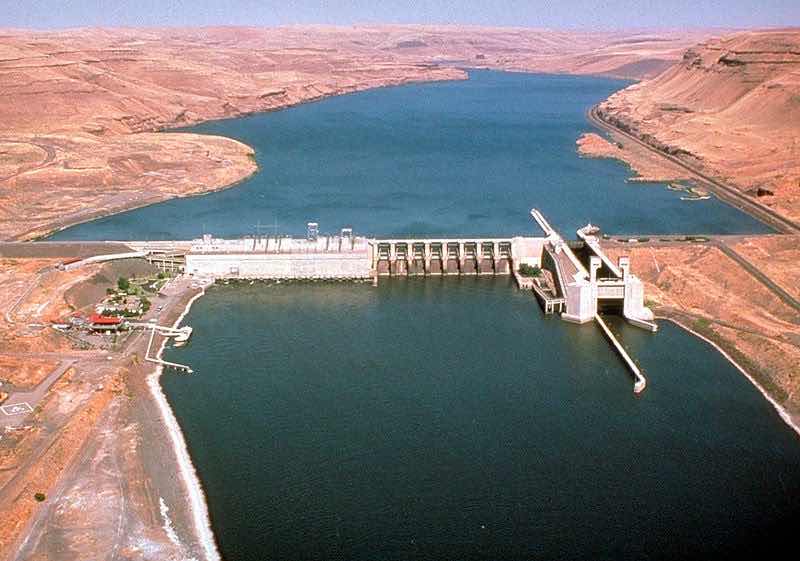 State and federal agencies have spent about $15.1 million in public funds to study breaching the four lower Snake River dams, a Spokane Valley, Wash., electric utility says.
"The money has paid for research, planning, staff work and reports, with some money still reserved for work underway," said Chelsea Martin, director of government relations and communications for Modern Electric Water Company. "It has not added a single new megawatt of electricity, mile of transmission or dollar of relief on a family's utility bill. Instead, agencies have continued commissioning studies as the Northwest faces warnings that it may not have enough dependable power to meet future demand."
The $15.1 million went to at least eight publicly funded studies, analyses, reviews and stakeholder-engagement efforts, including work to examine how electricity, transportation, irrigation, water supply and recreation could be replaced, according to the utility.
During a discussion with stakeholders representing different industries across Washington, someone asked how much public money had been spent on all the various studies surrounding potential removal of the lower Snake River dams, Martin said.
"There have been so many over the years, but nobody seemed to have a complete answer," she said. "That got my attention."
Modern Electric determined the figure by compiling state budgets, federal and state agency records, contracts, project webpages and responses from agency officials. Martin used the information in an op-ed in the Spokesman-Review in August, and Modern published a source guide.
The research has also helped inform conversations with stakeholders across the region about the future of our federal hydropower system, Martin said.
The studies have resulted in cost estimates in the billions to replace the dams. Martin would like to know where that money's supposed to come from.
"Are we talking about federal taxpayers, state taxpayers, electric customers, farmers?" she asked. "The money doesn't just appear out of nowhere. Those costs will eventually find their way into household budgets, electric bills, taxes, costs of doing business, our groceries."
Using public funds
Northwest ratepayers have already spent more than $20 billion in fish and wildlife-related costs for the federal Columbia River power system, Martin said.
"Nobody can honestly say our hydropower community doesn't care about fish," she said. "We put our money where our mouths are. I'm not suggesting we've done enough, absolutely not. If we're not getting the results we want, let's figure out how to do it better."
But she wonders about the usefulness of spending $15 million to study how to remove four working dams and replace everything they provide.
"What if we put that same $15 million towards figuring out how to keep more salmon alive?" she asked.
She points to other causes of fish mortality, such as warming oceans, sea lions, predatory birds and fish or pollution.
"I'm not pretending dams have no impact on fish," she said. "Why aren't we putting that same kind of energy into tackling the other things that kill salmon? Are we trying to save salmon, or are we so fixated on removing dams that we're overlooking other ways to help them?"
'Money well spent'
Others contend the studies are valuable.
"Washington is currently examining how to maintain essential services -- specifically around energy, transportation, irrigation, and recreation -- while restoring a free-flowing lower Snake River and recovering endangered salmon and steelhead," said Sarah Dyrdahl, Northwest regional director for the national conservation organization American Rivers. "These are complex infrastructure and economic questions with long-term implications for the entire Northwest region, and the current state studies are helping the region prudently prepare should the U.S. decide to remove the dams. The studies are providing detailed information we haven't had before ... So, yes, we think this is money well spent."
The organization calculates that Washington State has appropriated or spent $9.2 million on dam breaching studies. The organization can't verify any federal funds included in Modern Electric's figure, Dyrdahl said.
"The four lower Snake River dams are in Washington and if/when a decision is made to breach them, it's important to make sure the region is prepared and will benefit," she said. "Investing in planning is a practical step toward understanding the options, costs, and benefits for Washington's communities, businesses, farmers, and ratepayers."
Growing electricity demand
Martin believes the industry is beginning to get a better idea of the impact of the four dams for the larger power grid.
The company cites a 2026 analysis by Energy and Environmental Economics, which projected that growing electricity demand and power plant retirements could leave the Northwest about 9 gigawatts short of dependable capacity by 2030 and 14 to 18 gigawatts short by 2035.
The greatest danger would come during prolonged winter cold snaps when demand is high and hydropower output is low, according to the analysis.
"Why would we make the job harder?" Martin said. "We need more dependable electricity, not less."
Martin cited a legislator's comments during a public town hall meeting when asked how to save money during a "fiscal crunch" for the state.
"The legislator said, 'For one, we could stop throwing $1 million a year at dam studies, trying to pull out critical infrastructure when we need it most.'"
Related Sites:
$15 Million in Lower Snake River Dam Studies and Replacement Planning by Modern Electric Water Company, 8/12/26
Related Pages:
Pro-dam Advocate: WSDOT Draft Study Shows Removing Dams 'Bad for Ag, Taxpayers, Climate' by Matthew Weaver, Capital Press, 10/26/26
'Armchair Engineer' Sees Bigger Goal Behind Snake River Dam Controversy by Matthew Weaver, Capital Press, 7/1/24
Armchair Engineer: Judge's Order 'One Step Closer' to Dam Breaching by Matthew Weaver, Capital Press, 3/3/26
learn more on topics covered in the film
see the video
read the script
learn the songs
discussion forum