forum
library
tutorial
contact

Pro-dam Advocate: WSDOT Draft Study Shows
Removing Dams 'Bad for Ag, Taxpayers, Climate'
by Matthew Weaver
Capital Press, October 26, 2026
|
the film forum library tutorial contact |
|
Pro-dam Advocate: WSDOT Draft Study Shows
by Matthew Weaver
|
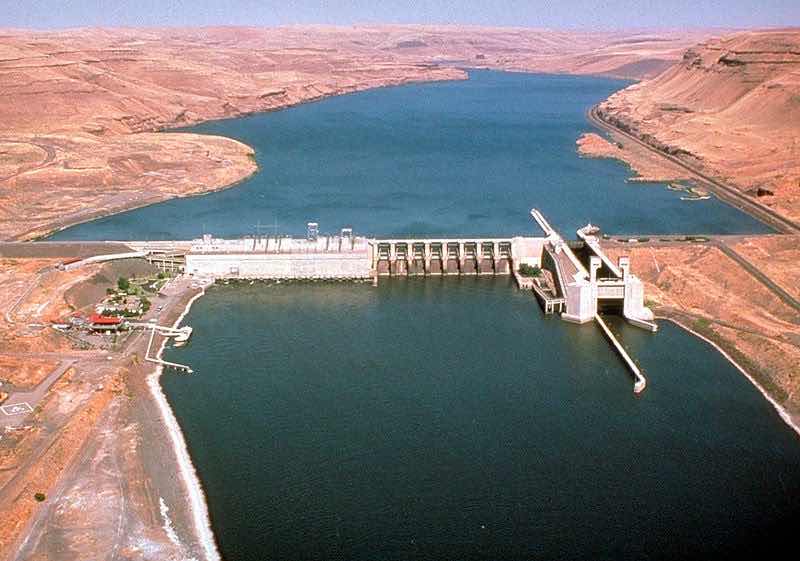 As the Washington State Department of Transportation finalizes its report on ways to replace the use of barges moving through the lower Snake River dams, initial numbers show "clearly" that removing the dams would be "bad for agriculture, bad for the taxpayers and bad for the climate," a Pacific Northwest pro-dam advocate says.
Social media content creator Adam Ratliff is known online as the "Armchair Engineer," advocating for dams, water and hydropower infrastructure.
He volunteers his time to the farmer-led non-profit Center for Sustainability and Working Rivers. The organization aims to increase public engagement and awareness about the services that the lower Snake River and Columbia River dams provide.
The state Legislature directed WSDOT to conduct an analysis of highway, road and freight rail transportation needs, options and impacts from shifting the movement of freight and goods that currently move by barge through the lower Snake River dams to highways, other roads and rail.
WSDOT held several open houses in October for its draft final report. The final report is due in December.
"This study does not come close to showing the totality of the transportation issues, because no study ever could," Ratliff said.
Of eight simulated scenarios, only two showed a drop in CO2 emissions, by single-digit percentages, Ratliff said.
"None of the transportation scenarios showed a major gain for the climate," he said. "All of them raised prices for farmers by up to 100%, and in most cases between 20% and 30%. Nothing went in the positive with this study."
Each scenario cost between $3 billion and $6 billion, just for transportation infrastructure. That doesn't include the cost of breaching the dams, environmental mitigation or other costs.
Furthermore, "in my opinion, those numbers are low," he added.
"We're not even touching replacing the electrical energy," Ratliff said. "This study is not a complete picture of the dam breaching issue. It's a very narrow snapshot. It has its issues, and even with those issues, the numbers show that it would not be better for the environment, the economy or the taxpayers."
Next steps
Ratliff expects the state will "quietly" release the final report, and the subject not to be brought up again until something changes in Congress.
"Which could be in a couple years, or a few months," he said.
Will we keep seeing studies until advocates for dam breaching get the results they want?
"Right now, the anti-dam movement is more vocal," Ratliff said. "As long as they're more vocal, they're likely to get more studies."
Ratliff doesn't expect to see the dams breached under the current Congress or current White House.
"But things change all the time," he said. "What we need to be doing is preparing for when they do change."
Thinking in decades
The anti-dam community "thinks in decades, not in months or years," Ratliff said. They're "content to get small wins that in the long-term equal success."
"Twenty years ago, they asked for a certain amount of spill, and then every five years, they've asked for more and more and more, until now they've taken something like a third of the power production out of the dams," he said. "They're content for these little wins that over time add up to their end goal."
The ag industry is more used to looking at one harvest cycle at a time, he said.
"With this dam issue, we can't be looking at this as a 'one and done,'" Ratliff said. "There are many smart people in the ag industry who do see this as a marathon."
Related Pages:
'Armchair Engineer' Sees Bigger Goal Behind Snake River Dam Controversy by Matthew Weaver, Capital Press, 7/1/24
Armchair Engineer: Judge's Order 'One Step Closer' to Dam Breaching by Matthew Weaver, Capital Press, 3/3/26
learn more on topics covered in the film
see the video
read the script
learn the songs
discussion forum